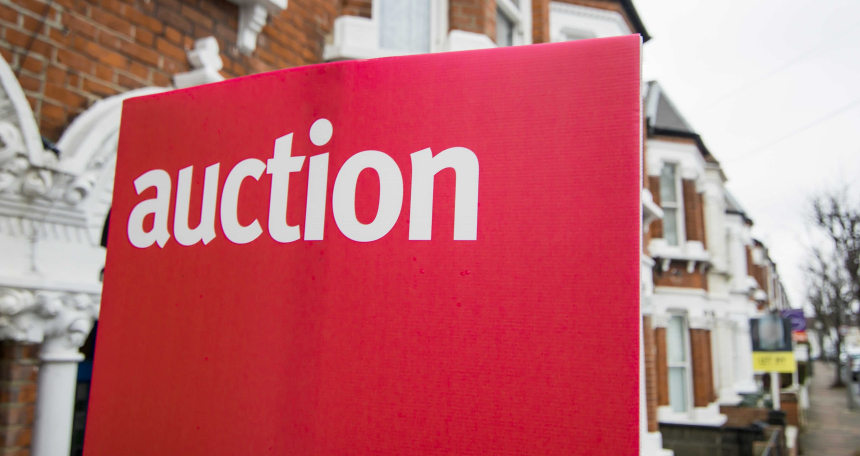
With more homes being bought and sold at auction than ever before, Daniel Curtis, MSP Capital’s Legal Director, shares his professional insight on the key points bidders and sellers need to think about.
“We are witnessing a huge rise in UK property auction activity,” says Dan, pointing to the latest report from industry analysts at the Essential Information Group (EIG).
Their research shows that in 2025 the total value of property sold at auction was around £5.9 billion, 7.1% up on the previous year. Residential sales saw a nine per cent increase, with 41,500 lots offered and just under 30,000 sold, the highest annual total on record.
The year ended with continuing momentum, say EIG, with the number of lots offered in December 2025 up 14.2% year-on-year and lots sold rising by 15.1%.
“People are attracted to the auction route by the speed of potential transactions and the ease of bidding,” Dan says.
“Spikes in activity in recent years are down to factors such as stamp duty holidays and the opening up of more online auctions in the wake of the pandemic. In late 2025, there was renewed confidence among buyers and sellers after a period of uncertainty earlier in the year about what the Budget might mean for the housing market. Once there was clarity around that, activity levels rebounded.
“Auctions are an increasingly important way to buy and sell. They are especially effective for chain-free situations or where committed buyers can move quickly. They can help bring forward properties that, for whatever reason, may be difficult to sell otherwise. An example is where a proposed property sale is stuck due to a council tax rise.
“We began offering property auction finance in 2021 after lots of conversations with our bridging loan clients as well as other borrowers and prospective borrowers. They told us they wanted an alternative to the traditional estate agency route and it’s a trend that has continued for us as a lender ever since. I think more and more houses will be going to auction in future.”
As part of its bridging portfolio, MSP Capital’s Property Auction Finance Loan is specifically tailored to help those developers and investors looking to buy a residential property at auction using an unregulated bridging loan. They may be a developer or investor and are typically company borrowers but can also be private individuals, joint borrowers or partnerships.
“It’s not just developers and investors who are keen on auctions”, explains Dan. “Many prospective buyers and sellers appreciate the certainty of a fixed timetable and price commitment. At the same time, it can be a stressful, ‘against the clock’-type experience so ready availability and certainty of funds is vital.”
Auction bridging from MSP Capital includes the assurance of suitability for all residential property types including those that are vacant, let on AST (assured shorthold tenancy) or in need of refurbishment.
MSP Capital’s product is offered at up to 75% LTV and comes with zero exit fee options, fixed legal fees and no valuation fees for properties worth under £1 million.
The aim, says Dan, is to make it easier for bidders to access funding as soon as that ‘ticking clock’ starts. The first step is an agreement in principle before the bid goes in. After the auction, and assuming it’s a successful bid, there is a commitment to deliver the funds within the typical 28-day completion deadline. “We also have in-house lawyers as well as property experts who can help and advise,” Dan adds.
Here are Dan’s top ten auction tips:
- Check the property’s legal pack before making an offer to be sure of what the lot entails. Instruct a solicitor to do that for you. The cost is generally worth it for peace of mind.
- Ensure you satisfy all identity requirements well in advance of auction day. Most auctions are now online and auction platforms require that ID is undertaken beforehand. You don’t want to put in the effort only to be prevented from bidding because of an ID requirement.
- Read the auction contract and special conditions so that you understand what you are potentially contracting to do.
- Understand the costs you will have to pay in addition to the purchase price (there will be buyer’s fees and auctioneer fees). These can be sizeable and a nasty surprise if you have not factored them into you financial modelling.
- Consider time for a survey. A reputable auctioneer will tend to advise a survey but if there is no time you could still ask a surveyor or builder to undertake a quick visual inspection to establish whether or not there are any obvious issues.
- Ask questions of the auctioneer contacts before the auction.
- Arrange your finance before bidding. Make sure you have a deposit and then sufficient finance to complete.
- Set yourself a price limit and stick to it. Ask a friend or colleague to assist you to prevent you exceeding your limit by getting carried away in the moment.
- Always remember that the fall of the auctioneer’s hammer is the point at which the sale becomes legally binding.
- The more thorough the homework, the less chance of a nasty expensive surprise.
