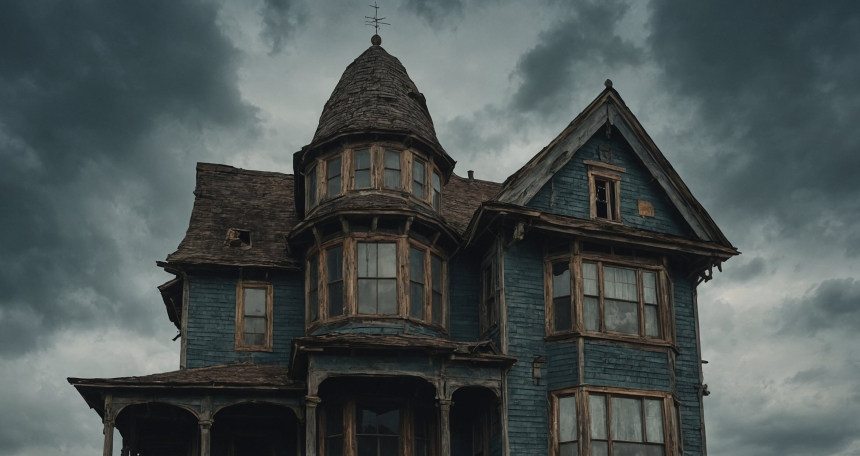
Homeowners selling a property with a spooky reputation have been warned that its haunted history could come back to bite them if a nervous buyer starts asking questions.
From unexplained footsteps and doors opening by themselves to tales of former residents refusing to leave from beyond the grave, Britain has no shortage of supposedly haunted homes.
But as Halloween approaches, a property expert has revealed whether sellers actually have to warn prospective buyers if their home comes with a paranormal past.
Unlike in the US, where allegedly haunted properties have been at the centre of high-profile legal cases, there is no specific rule in England requiring homeowners to declare: “My house is haunted.”
In fact, sellers filling out the paperwork for their move will find questions about boundaries, building work, disputes and services, but nothing asking whether a ghost has taken up residence in the spare room.
However, that does not give homeowners free rein to tell buyers whatever they want.
Jordan Kluth, property expert at John Fowlers, said: “There is no specific question on the standard conveyancing forms asking whether a property is haunted, so sellers should not expect to see a box asking them to declare any ghosts or paranormal activity.
“The position in England is different to some of the well-known cases we have seen in the US. What is important is that a seller does not misrepresent the property or give an untrue answer to a buyer.
“For example, if a buyer specifically asks whether a house is haunted and the seller dishonestly says no, despite there being reports that the property is haunted, that could potentially become an issue.
“The safest approach is always to answer enquiries truthfully and speak to your conveyancer if you are unsure about what information should be provided.”
At the heart of the issue is caveat emptor, the centuries-old principle meaning “buyer beware”.
Broadly speaking, sellers do not have to volunteer every detail about a property. Instead, buyers and their solicitors make enquiries and carry out searches to establish important information before committing to a purchase.
But there are limits to that principle.
If a buyer asks a specific question, the seller must answer truthfully. Sellers must also provide information required as part of the standard conveyancing process, while failing to reveal something could become problematic if it makes another answer misleading.
That means a rumoured ghost is unlikely to appear alongside questions about fences, extensions and drains on standard property forms.
But an unusual history can still leave sellers wondering what they should say.
Jordan said: “Sellers should consider what they think a buyer would want to know before purchasing the property and make sure they give truthful answers to any enquiries.
“If there is something unusual about the history or reputation of the property and you are concerned about whether it needs to be disclosed, you should seek advice from your conveyancer before answering questions.”
For buyers worried they may be moving in with more occupants than expected, the lesson is also simple: ask questions about anything that genuinely concerns you.
A property's reputation could even become part of those enquiries, particularly if local stories, previous reports or its history have left you feeling uneasy.
And for sellers, getting legal advice before answering an unusual question may be wiser than trying to bury a property's spooky reputation.
There might not be a “ghosts” box to tick when selling a home in England, but that does not mean homeowners should invent an answer when someone asks what has been going bump in the night.
So if your house has its own local legend, unexplained footsteps or a resident poltergeist this Halloween, don't panic.
You may not have to put “GHOST INCLUDED” on the For Sale sign, but if a buyer starts asking spooky questions, honesty is considerably less frightening than allowing the issue to come back from the dead later.
